BodyFriend vs Osaki: Leg Mechanics or Spec Sheet
Osaki is one of the most searched massage chair brands in the US, and BodyFriend is one of the least understood. People cross-shop them because the prices overlap, then discover the two brands are trying to do different things to your body.
Before anything else, the sourcing. We are an authorized BodyFriend dealer, so the BodyFriend side comes from our own catalog and the chairs on our San Jose floor. We do not sell Osaki. Everything on the Osaki side is what Osaki itself publishes, attributed, and where the manufacturer does not publish something we say so rather than filling the gap.
The short answer
Choose BodyFriend if you want mechanical lower-body work and stretch, or a chair that reads as furniture in a room you actually use.
Choose Osaki if you want maximum roller specification per dollar and a very wide model list to pick from.
Side by side, on published figures only
Where a cell says not published, that means nobody publishes the number, not that the figure is bad. We would rather leave a blank than fill it with a guess.
| BodyFriend | Osaki | |
|---|---|---|
The real difference is how each brand stretches you
This is the part worth understanding, because it is where the two brands genuinely diverge and it is not obvious from a spec sheet.
BodyFriend's engineering signature is Robo-Walking: a leg mechanism that drives each leg independently rather than holding both in a fixed footrest. It is mechanical movement, and you feel it as a stretch through the hips and lower body. The Palace NEO pairs independent leg movement with XD PRO massage and 21 safety sensors, and the Pharaoh NEO builds eight signature stretch programs into one frame.
Osaki's stretch programs, by the brand's own published descriptions, work mostly by airbag. Titan Chair, which operates the Osaki brand, describes its OS-Pro stretch as "locking the legs, hips, arms and shoulders by using the airbags", and elsewhere as "inflating the airbag, grabbing the ankles, and pulling". That is a different sensation from a mechanism that moves your legs.
There is one Osaki exception worth naming honestly: the Trion Flex Duo carries a feature Osaki lists as Walking Technology. The name is on Osaki's own product page. The detailed explanation of how it works is not in Osaki's official specification text, so we will not describe its mechanics beyond that.
So: both brands stretch you, one mostly by holding and pulling with air, the other by moving your legs. Neither is wrong. They feel completely different and that is the thing to test.
Design, and why it is not a soft factor
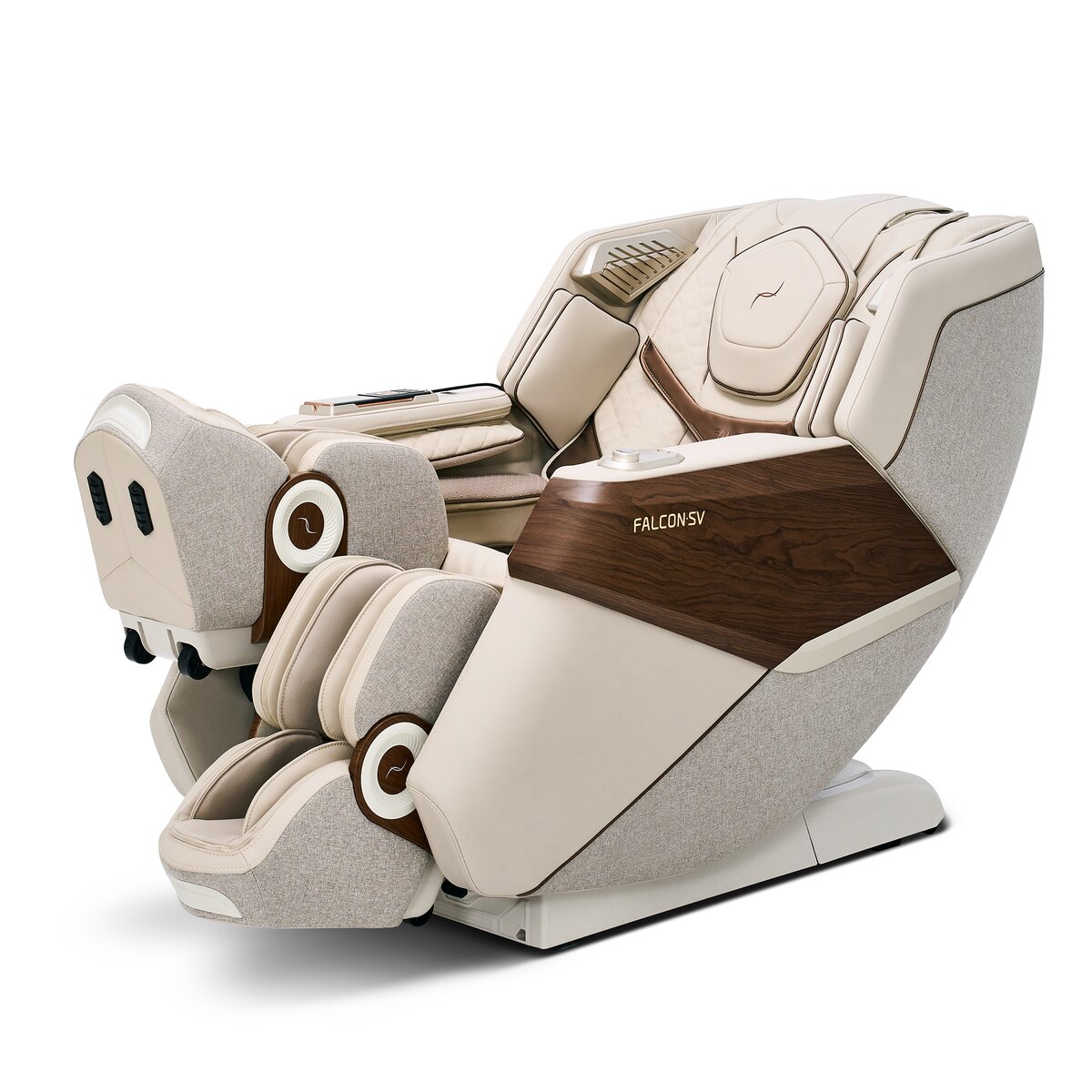
BodyFriend designs for the room first. The line includes a collaboration with Italdesign on the Leonardo DV, walnut accents on the Falcon SV, and compact models such as the Eliza shaped to share a living room rather than dominate it.
Osaki's own positioning language is more general. Its about page talks about "beautiful, space-saving designs for modern homes" and "premium craftsmanship", and the brand describes itself as the "No.1 Brand in USA". That last one is Osaki's own claim; we found no third-party market data behind it, so treat it as positioning rather than fact.
If the chair has to live somewhere guests see, this is a real differentiator and it is the most common reason people choose BodyFriend on our floor.
Warranty, where the published terms differ
Osaki's official warranty page publishes one year parts and labour, a second year parts, and three years on the structural frame, with paid extensions available. Osaki product pages separately advertise five years, described as three years full service plus two years parts, which appears to include the top extension. Those two statements do not match and we could not establish which applies to a given purchase, so if you are buying Osaki, get the warranty in writing for your specific chair and order.
On the BodyFriend side we publish the manufacturer warranty per model on each product page rather than quoting one number for the whole brand, because the terms differ by model. We learned that the hard way: this site used to claim a single warranty length across a five-brand catalog and it was wrong for most of them.
Range and price
Our BodyFriend lineup runs from around $3,500 to $15,000 across eleven models. Osaki's published lineup is considerably longer and reaches to $16,999 on the Pinnacle 5D DuoFlex AI, with mid-range 4D models listed in the eight to fourteen thousand band as of 23 September 2026.
One caution if you are comparing discounts: Osaki's site lists original prices that are internally inconsistent in places, including at least one product where the "original" price is lower than the current one and another showing zero. Compare current prices, not percentages off.
What neither brand publishes
Track length in inches, for most models on both sides. Kyota, which we also carry, publishes figures up to 53 inches, and that transparency is genuinely useful when lower-back coverage is the question. If track length is central to your decision, look at our L-track collection where every chair that reaches past the lower back is grouped, and ask for the published figure on any chair from any brand.
Country of manufacture is the other blank. Osaki does not publish it except on one model whose name includes "Made in Japan".
Which one suits which buyer
Hips, legs and lower body stiffness. BodyFriend, for mechanical leg movement rather than airbag pulling.
Stretch programming is the reason you are buying. BodyFriend, and the Pharaoh NEO specifically.
You want the longest possible spec list for the money. Osaki, on published range breadth.
The chair has to look right in a living room. BodyFriend.
You want to sit in it this week near San Jose. BodyFriend, because our range is on one floor on Saratoga Avenue.
Warranty certainty matters to you. Get it in writing either way, but be aware Osaki's own two published statements differ.
Frequently asked questions
Is Osaki or BodyFriend better?
Neither, as a brand. They solve different problems: BodyFriend works your lower body mechanically and designs for the room, Osaki offers a wider model list and competes on roller specification. The better chair is the one that fits your body, which is why we push for a visit rather than a recommendation.
Does Osaki have a walking or leg-stretch mechanism like BodyFriend?
Osaki lists a feature called Walking Technology on the Trion Flex Duo, and the name appears on Osaki's own product page. Across the rest of the range, Osaki's published stretch descriptions rely on airbags that hold and pull rather than on a mechanism that moves the legs. BodyFriend's Robo-Walking drives each leg independently across much of its lineup.
What is Robo-Walking?
It is BodyFriend's name for a leg mechanism that moves each leg independently instead of holding both in one fixed footrest. It is the feature most people notice first when they compare a Falcon to a conventional chair, and it is easier to understand in thirty seconds of sitting than in any description.
What warranty does Osaki offer?
Osaki's official warranty page publishes one year parts and labour, two years parts, and three years structural frame, with paid extensions. Its product pages advertise five years described as three years full service plus two years parts. The two do not match, so ask for the terms in writing for your specific order.
Can I compare BodyFriend and Osaki side by side?
Not in one room, honestly. We carry BodyFriend and four other brands on our San Jose floor; we do not sell Osaki. What you can do here is feel what mechanical leg movement and stretch programming actually do, which is the thing a spec sheet cannot convey, and take that reference point with you.
How much does a BodyFriend massage chair cost?
Our current BodyFriend lineup runs from around $3,500 to $15,000 across eleven models. Live pricing for every model is on the BodyFriend brand page, updated from our catalog rather than by hand.
The chairs behind this comparison
We are an authorized dealer for BodyFriend, so these are live prices from our own catalog. We do not sell Osaki, which is why there are no cards for it: every Osaki figure in this guide comes from their published specifications, and we would rather say that plainly than show numbers we cannot stand behind.
BodyFriend
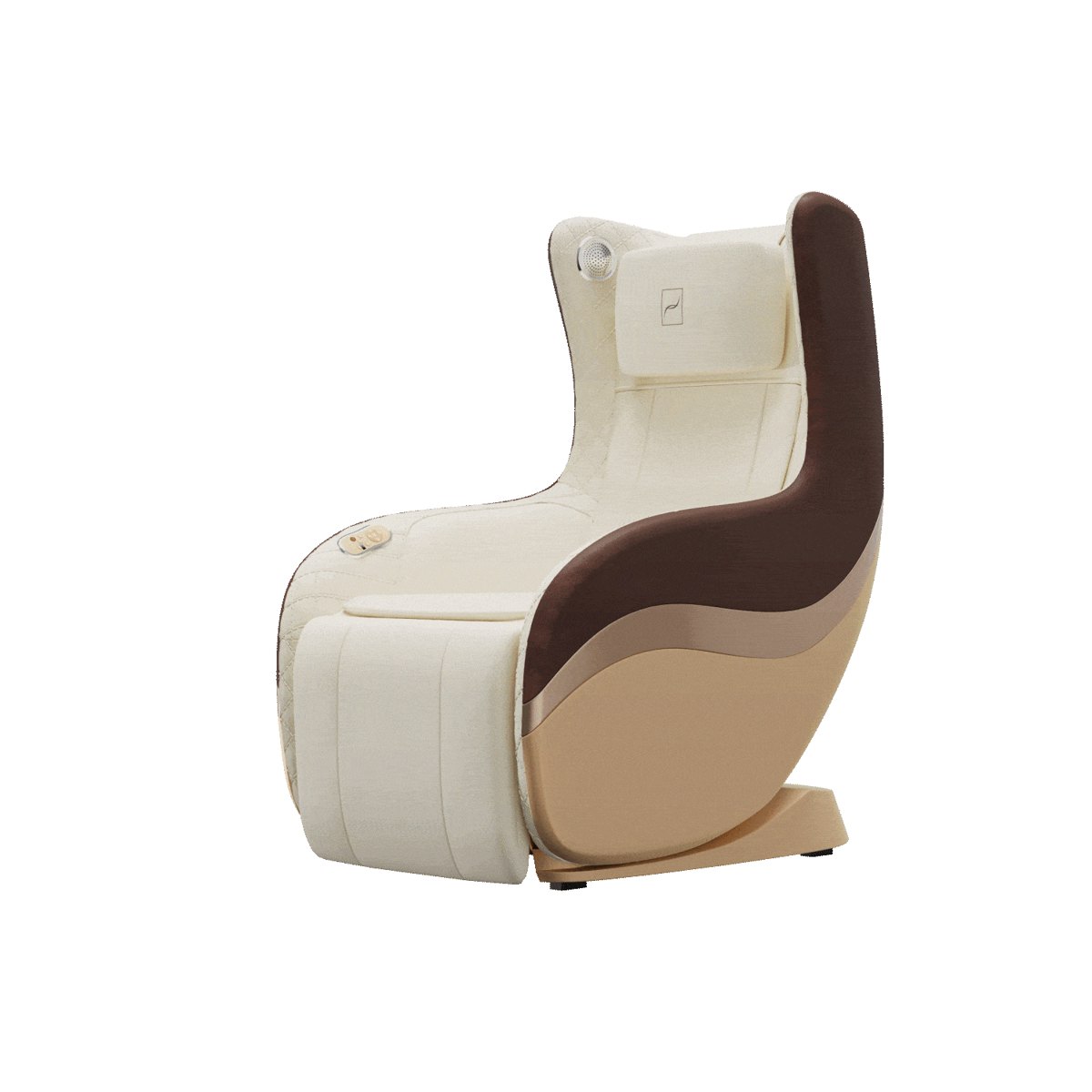
BodyFriend Eliza
$3,499.99
View details →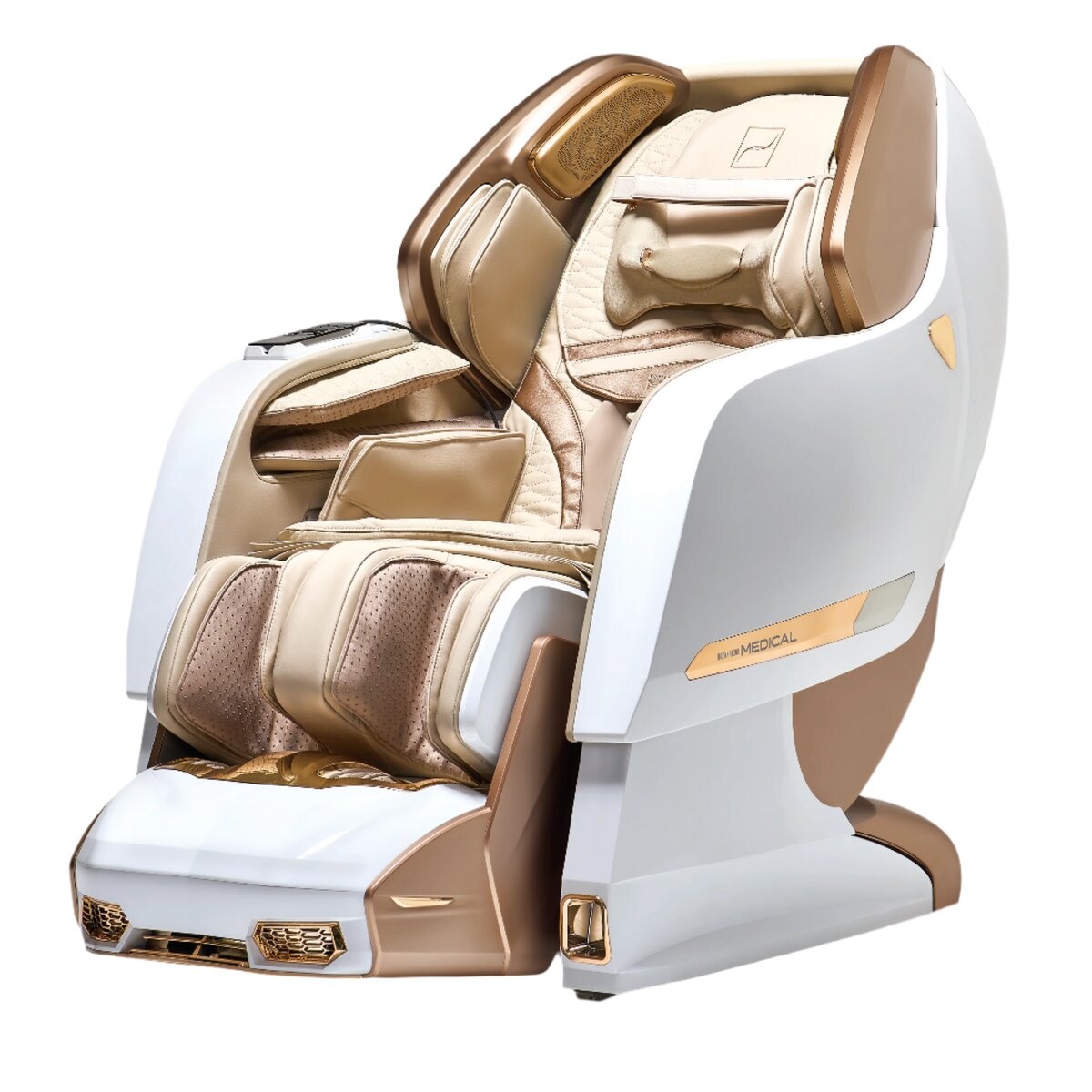
BodyFriend Medical Phantom
$10,799 $13,999
Heat
View details →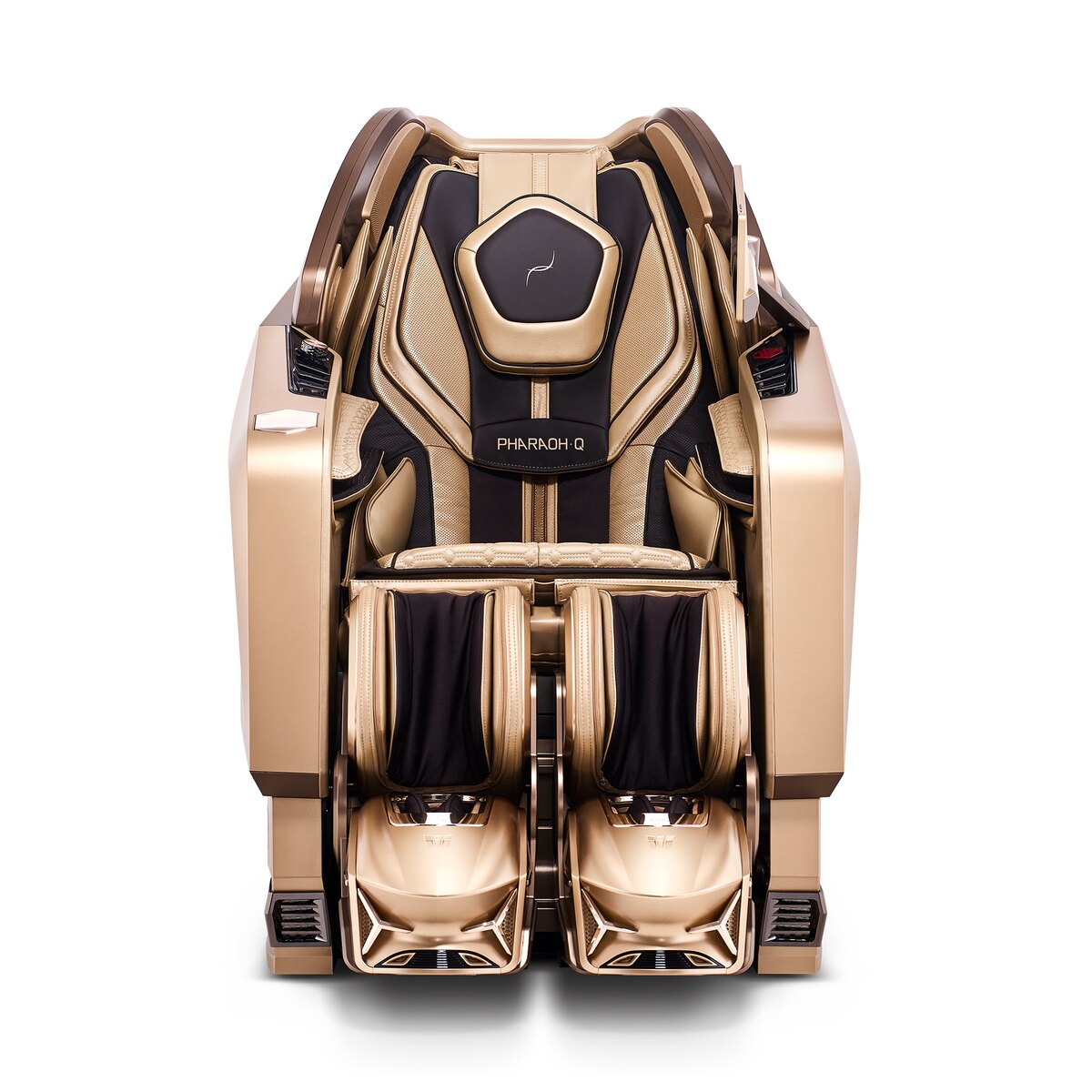
BodyFriend Pharaoh Q
$15,000 $17,000
Heat
View details →Model-by-model detail is in our BodyFriend guide, and the BodyFriend brand page shows current stock.
Before you decide, sit in them
The spec sheet settles less of this than people expect. Roller depth that reads as firm to one person reads as painful to another, and fit matters more than any feature count.
Ten minutes in the chair: what to check
- Shoulder alignment. The airbags should land on your shoulders, not your ears or your upper arms. This is the single most common fit failure and you feel it in the first thirty seconds.
- Neck roller height. Ask the chair to run its neck program. If the rollers sit below where it actually hurts, no amount of intensity will fix it.
- Back roller depth. Take it past the setting you think you want. A chair that feels perfect at maximum has no headroom on a bad day.
- Calf reach. Your calves should sit in the calf section, not above it. Taller users get caught here more than anywhere else.
- Foot rollers. Some people love them and some cannot tolerate them. Ten seconds tells you which one you are.
- Recline and return. How the chair comes out of zero gravity matters as much as how it goes in. A jerky return gets annoying by week three.
- Wall clearance. Ask how much space it needs fully reclined, then measure your room before you commit.
- Remote and controls. If you cannot start your favourite program in two taps, you will stop using it.
- Noise at full power. Quiet in the showroom is not the test. Run it hard and listen, especially if the chair will live in a shared room.
- Getting in and out. Try it the way you will at home: tired, at the end of the day, without thinking about it.
The best comparison happens in the chair.
Both brands are on one floor in San Jose, plugged in, no appointment needed.