Ceragem vs Panasonic: Two Different Takes on Heat
Most massage chair comparisons pit two roller chairs against each other. This one is different, because both of these brands built their reputation on heat rather than on how hard the rollers press.
That makes them genuinely comparable, and it also makes almost every spec-sheet comparison you will find online beside the point.
A word on sourcing before we start. We are an authorized Ceragem dealer, so everything on the Ceragem side comes from our own catalog and the chairs on our floor. We do not sell Panasonic. Everything on the Panasonic side below is what the manufacturer or its US distributor publishes, attributed as such, and where nobody publishes a figure we say so instead of guessing.
The short answer
Choose Ceragem if you want thermal spinal care as the main event and you want to sit in the chair before buying. The range is broader at the accessible end and every model is on a showroom floor.
Choose Panasonic if you specifically want infrared heated rollers, which put the heating element on the roller assembly itself rather than in a pad behind it, and you are comfortable buying through a single distributor.
Side by side, on published figures only
Where a cell says not published, that means nobody publishes the number, not that the figure is bad. We would rather leave a blank than fill it with a guess.
| Ceragem | Panasonic (US) | |
|---|---|---|
How each brand delivers heat
This is the real difference and it is not a matter of degree.
Ceragem's Master line is thermal spinal care: warmth travels along the spine at an intensity you set, and on models such as the Master V9 it covers the full spine. The Pause line wraps a similar approach in a conventional chair shape. Across our current Ceragem lineup, eight of the nine chairs carry heat or thermal therapy as a published feature.
Panasonic's signature is different: infrared heated rollers, where the heating elements sit directly on the massage mechanism. Panasonic describes this on its own site, so it is the one Panasonic claim here that comes from the manufacturer rather than a reseller. The brand language around it is "Zengineering" and the mechanism family is called RealPro ULTRA.
Both approaches warm you. One warms the area while a mechanism works it; the other makes warmth the treatment.
What Panasonic actually sells in the US right now
This is the part most comparison articles get wrong, so it is worth being precise.
Panasonic has not left the US market, but it does not sell these chairs directly either. Its own store page points customers to a single partner, Furniture For Life, and several of Panasonic's own product URLs currently return errors or a maintenance notice. The practical effect is that the specification tables, prices and even the country of manufacture for the current line are published by the distributor rather than by Panasonic.
As of 23 September 2026 the distributor lists three current models: the MAF1, the MAK1 5D A.I. and the MAN1 5D A.I., running from roughly six thousand dollars to around fourteen thousand. Two earlier models, the MAJ7 and the MA73, are listed as retired.
Three published facts worth knowing before you shortlist a Panasonic
The two upper models do not have zero gravity. The distributor specification tables for the MAK1 and the MAN1 both state it plainly: No. That is unusual at this price and it is the single most consequential spec difference in this comparison, because zero-gravity recline is the position most people find most comfortable and it makes any mechanism feel deeper. Ceragem's Pause M6 publishes a dual reclining system that transitions into zero-gravity mode.
The warranty has an hours cap. The published terms are three years parts, labour and in-home service, with five years on the massage mechanism and electronics, but all of it is limited to 1,000 hours of use, whichever comes first. An extended plan removes the hour limit. A cap like that is not common and it is worth reading before you compare warranty lengths brand to brand.
Nobody publishes the track length. Not Panasonic, not the distributor, for any current model. We looked. If a retailer quotes you a Panasonic track figure, ask where it comes from, because we could not find one published anywhere.
Where Ceragem is stronger
Breadth at the accessible end. Our Ceragem range runs from around $3,500 to just under $10,000 across nine models, which means there is a Ceragem for a first-time buyer and a Ceragem for someone who wants the full Master experience. Panasonic's current US line is three chairs and starts higher.
You can sit in it. Every Ceragem model we carry is plugged in on our San Jose floor. Panasonic operates an authorised location network with a postcode finder, so in-person trials exist, but the chair you want may not be on the nearest floor.
Thermal coverage across the line. Eight of nine Ceragem chairs publish heat. If warmth is the reason you are shopping, that is a deeper bench than three models.
Where Panasonic is stronger, on the published evidence
The heated roller idea itself. Putting the heating element on the roller rather than behind it is a genuinely different sensation, and it is Panasonic's own documented approach rather than a marketing line invented by a reseller.
Body scanning detail. The MAN1 publishes a 1,260-point acupoint body scan. Ceragem does not publish a comparable point count, so this is a Panasonic-side number with no Ceragem equivalent to weigh it against.
Brand engineering heritage. Panasonic is a large electronics manufacturer and that shows in the build. We will not repeat the "hundred years of massage chairs" line some retailers use, because we could not verify it and Panasonic does not say it.
One thing neither brand tells you
Where the chair is made. Panasonic does not publish a country of manufacture for these models anywhere we could find; the distributor's specification table says China for all three. Ceragem's technology is used in more than 70 countries, which is a distribution fact rather than a manufacturing one.
If origin matters to your decision, ask the seller to put the answer in writing, from either brand. That goes for us too.
Which one suits which buyer
Sustained warmth along the spine is what your body responds to. Ceragem, and start with a Master model.
You want heat delivered through the rollers themselves. Panasonic, specifically for the infrared heated roller design.
Zero-gravity recline is non-negotiable. Check the specific model carefully. Two of Panasonic's three current chairs publish No.
You want to try before you buy, this week. Ceragem, because our whole range is on one floor in San Jose.
Budget is under $5,000. Ceragem is the only one of the two with an answer at that level.
You want the most detailed body scan published. Panasonic MAN1, on its published point count.
Frequently asked questions
Is Panasonic still selling massage chairs in the US?
Yes, but not directly. Panasonic's own store page directs customers to a single partner, Furniture For Life, and its current models are listed and specified there rather than on Panasonic's own product pages. Several Panasonic product URLs currently return errors or a maintenance notice.
Do Panasonic massage chairs have zero gravity?
Not on the two upper models. The distributor specification tables for the MAK1 5D A.I. and the MAN1 5D A.I. both state No. Zero gravity reclines you with your legs slightly above your heart and most people find it the most comfortable position on a chair, so this is worth checking model by model rather than assuming.
Which is better for back pain, Ceragem or Panasonic?
Neither can be recommended as a treatment and we will not do that. Both are wellness products rather than medical devices. Ceragem's approach is sustained warmth along the spine; Panasonic's is heat delivered through the roller mechanism. If you are managing a diagnosed condition, check with your doctor first, and read our guide on choosing a massage chair for back pain.
What is the Panasonic massage chair warranty?
As published by the US distributor: three years parts, labour and in-home service, five years on the massage mechanism and electronics, all capped at 1,000 hours of use, whichever comes first. A paid extension removes the hour cap. We would encourage anyone comparing warranties to look for a cap like this on any brand, including ours.
Can I try a Ceragem chair in San Jose?
Yes. Our full Ceragem range is on the floor at our San Jose showroom on Saratoga Avenue, plugged in and ready to use, no appointment needed. Trying a thermal chair next to a roller chair in one visit is the fastest way to find out which approach your body prefers.
How much does a Ceragem massage chair cost?
Our current Ceragem lineup runs from around $3,500 to just under $10,000 across nine models. Live pricing for every model is on the Ceragem brand page and updates from our catalog rather than being maintained by hand.
The chairs behind this comparison
We are an authorized dealer for Ceragem, so these are live prices from our own catalog. We do not sell Panasonic, which is why there are no cards for it: every Panasonic figure in this guide comes from their published specifications, and we would rather say that plainly than show numbers we cannot stand behind.
Ceragem
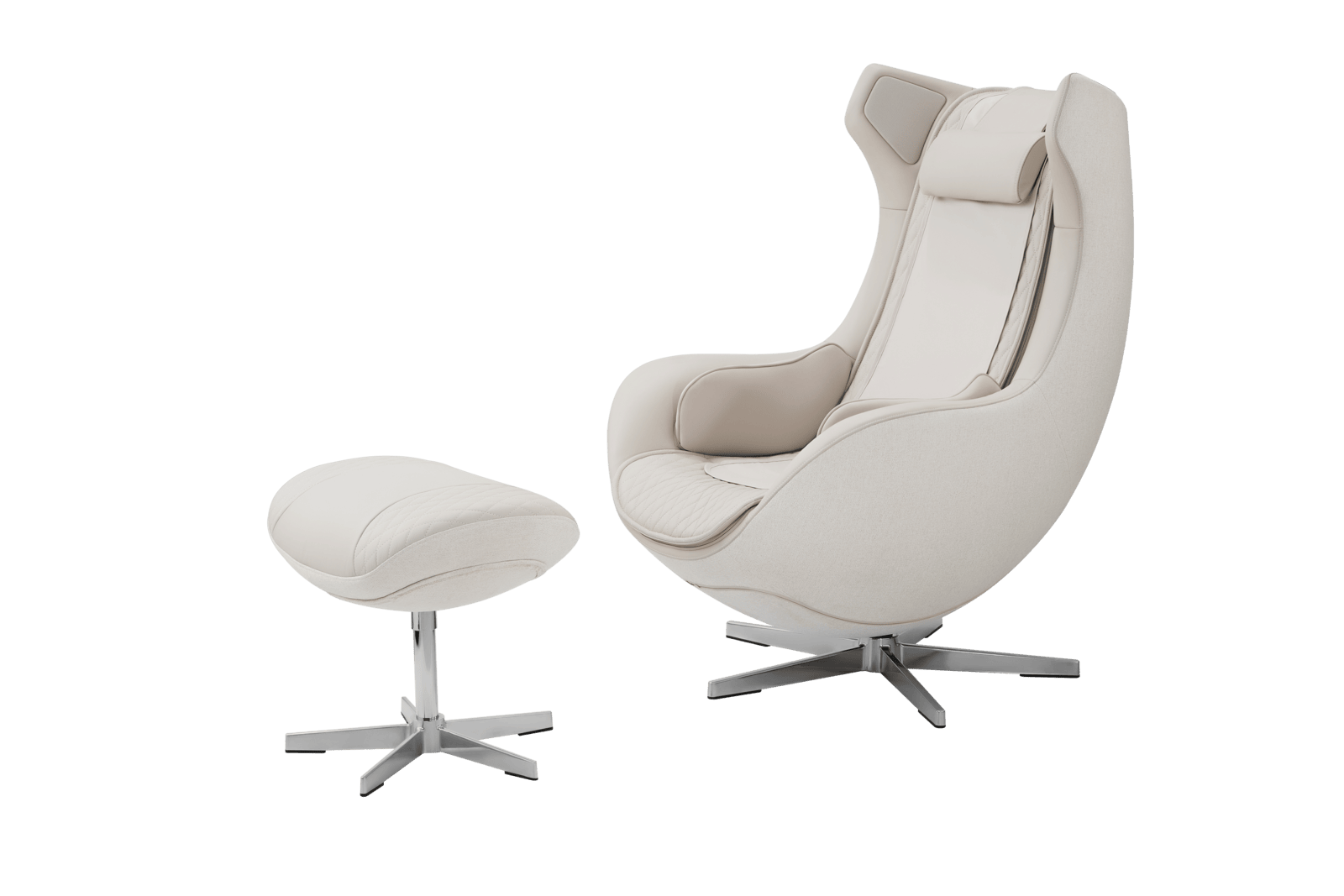
Ceragem Pause M4
$2,499 $4,399
Heat
View details →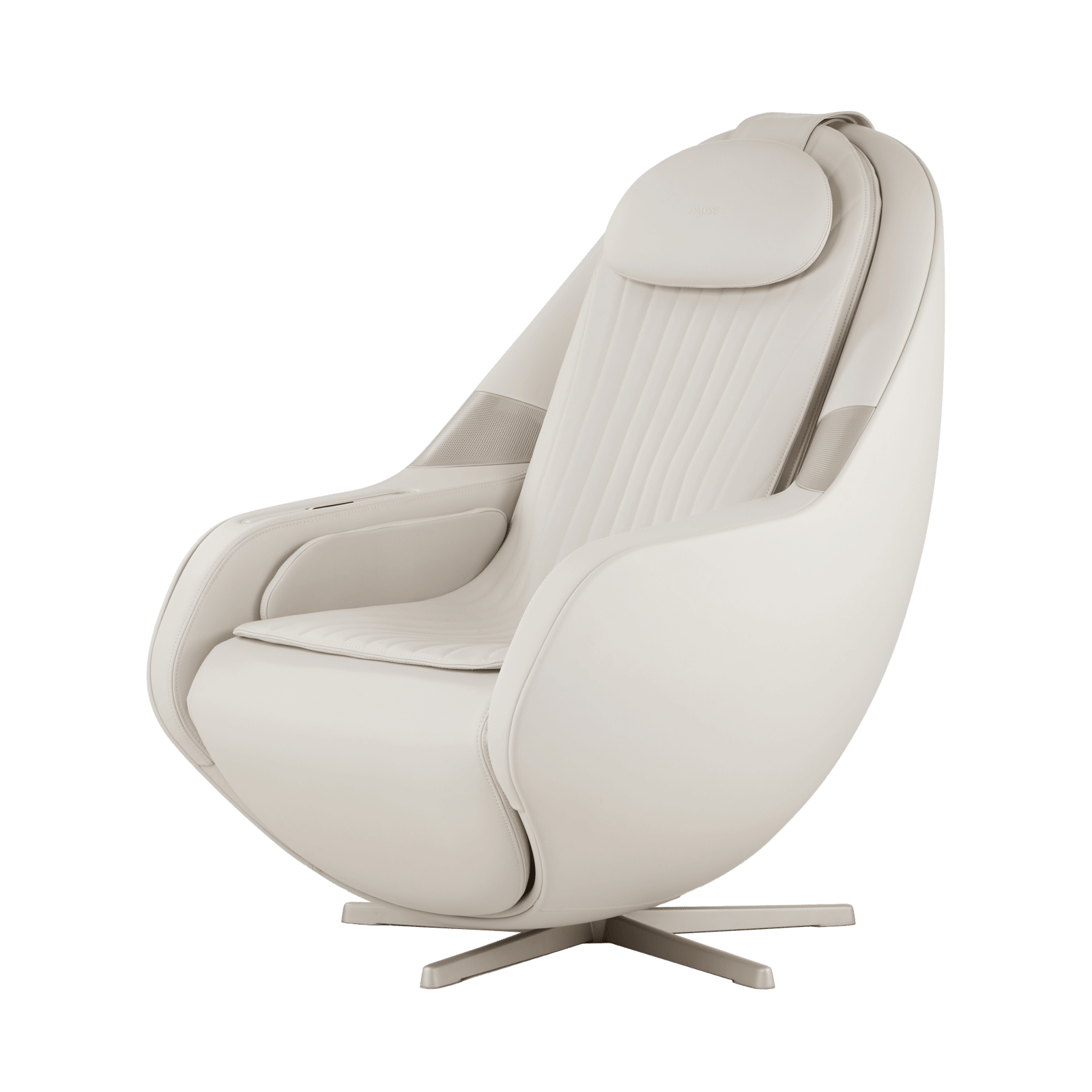
Ceragem Pause M6
$6,499
Heat
View details →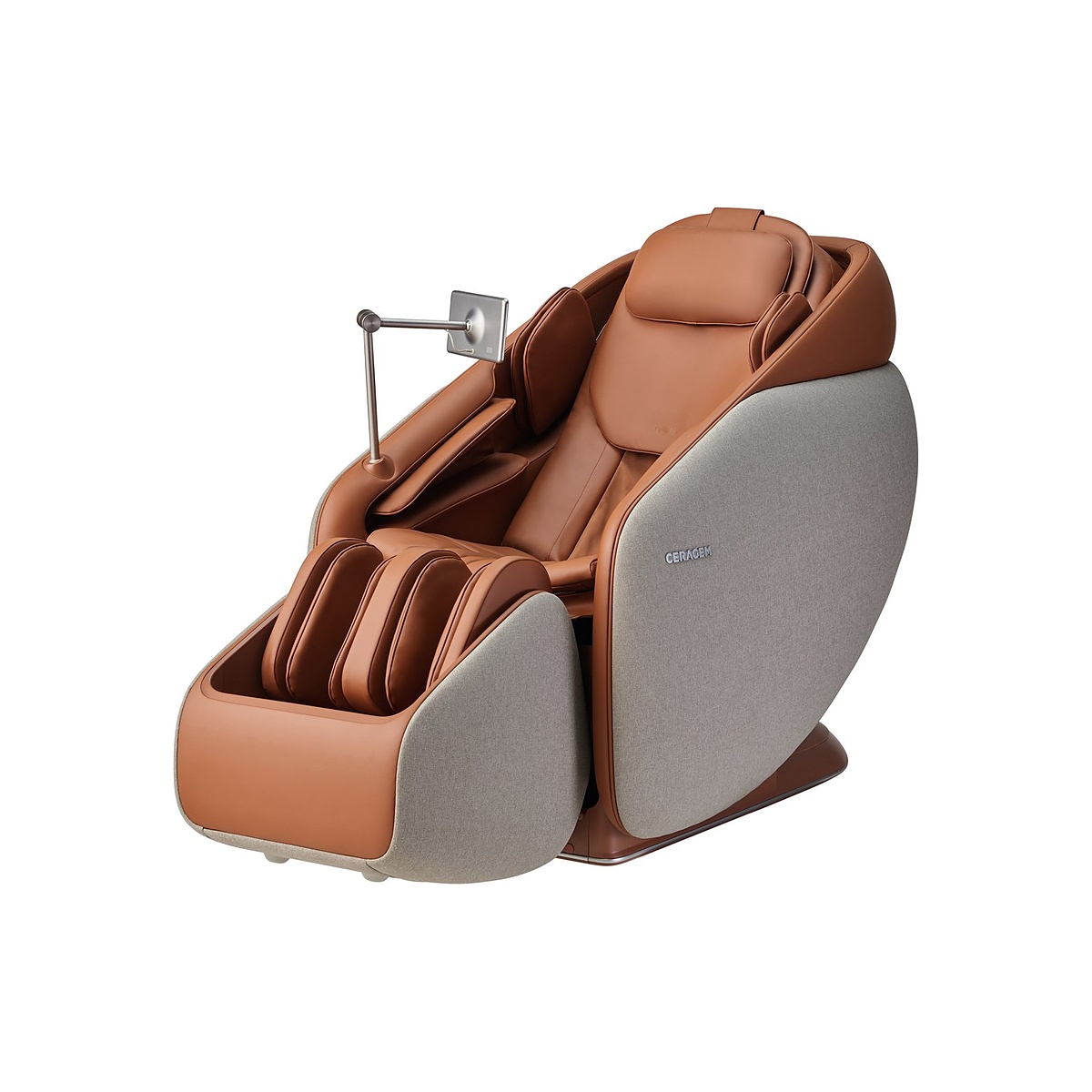
Ceragem Pause M10
$9,999 $13,999
Body scan
View details →Model-by-model detail is in our Ceragem guide, and the Ceragem brand page shows current stock.
Before you decide, sit in them
The spec sheet settles less of this than people expect. Roller depth that reads as firm to one person reads as painful to another, and fit matters more than any feature count.
Ten minutes in the chair: what to check
- Shoulder alignment. The airbags should land on your shoulders, not your ears or your upper arms. This is the single most common fit failure and you feel it in the first thirty seconds.
- Neck roller height. Ask the chair to run its neck program. If the rollers sit below where it actually hurts, no amount of intensity will fix it.
- Back roller depth. Take it past the setting you think you want. A chair that feels perfect at maximum has no headroom on a bad day.
- Calf reach. Your calves should sit in the calf section, not above it. Taller users get caught here more than anywhere else.
- Foot rollers. Some people love them and some cannot tolerate them. Ten seconds tells you which one you are.
- Recline and return. How the chair comes out of zero gravity matters as much as how it goes in. A jerky return gets annoying by week three.
- Wall clearance. Ask how much space it needs fully reclined, then measure your room before you commit.
- Remote and controls. If you cannot start your favourite program in two taps, you will stop using it.
- Noise at full power. Quiet in the showroom is not the test. Run it hard and listen, especially if the chair will live in a shared room.
- Getting in and out. Try it the way you will at home: tired, at the end of the day, without thinking about it.
The best comparison happens in the chair.
Both brands are on one floor in San Jose, plugged in, no appointment needed.